
Pre-delivery and Delivery Total Cost
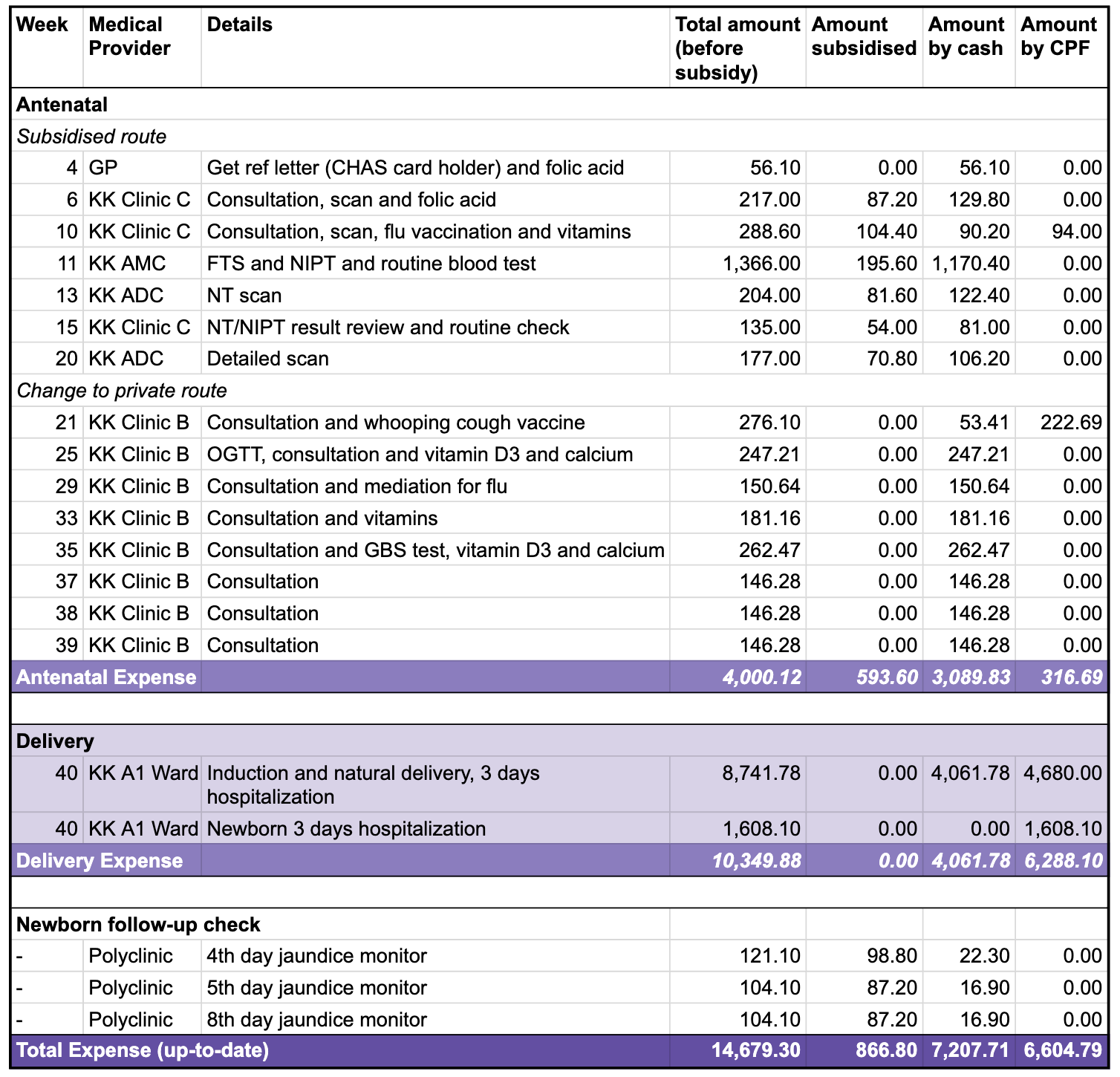
Get GP referral to KKH subsidy route. Switched to private route with a designated doctor at the 20th week of pregnancy. Admitted for labor induction and had a natural delivery at exact the due day. Stayed in A1 ward for four days and three nights.
💰 Prenatal Checkups Cost
Total cost: $4,000.12
- Government subsidy: $593.60
- Cash payment: $3,089.83
- CPF payment: $316.69 (vaccinations covered under CPF)
💰 Deliver Cost
Total cost: $10,349.88 (mother: $8,741.78, baby: $1,608.10)
- Mother’s cash payment: $4,061.78
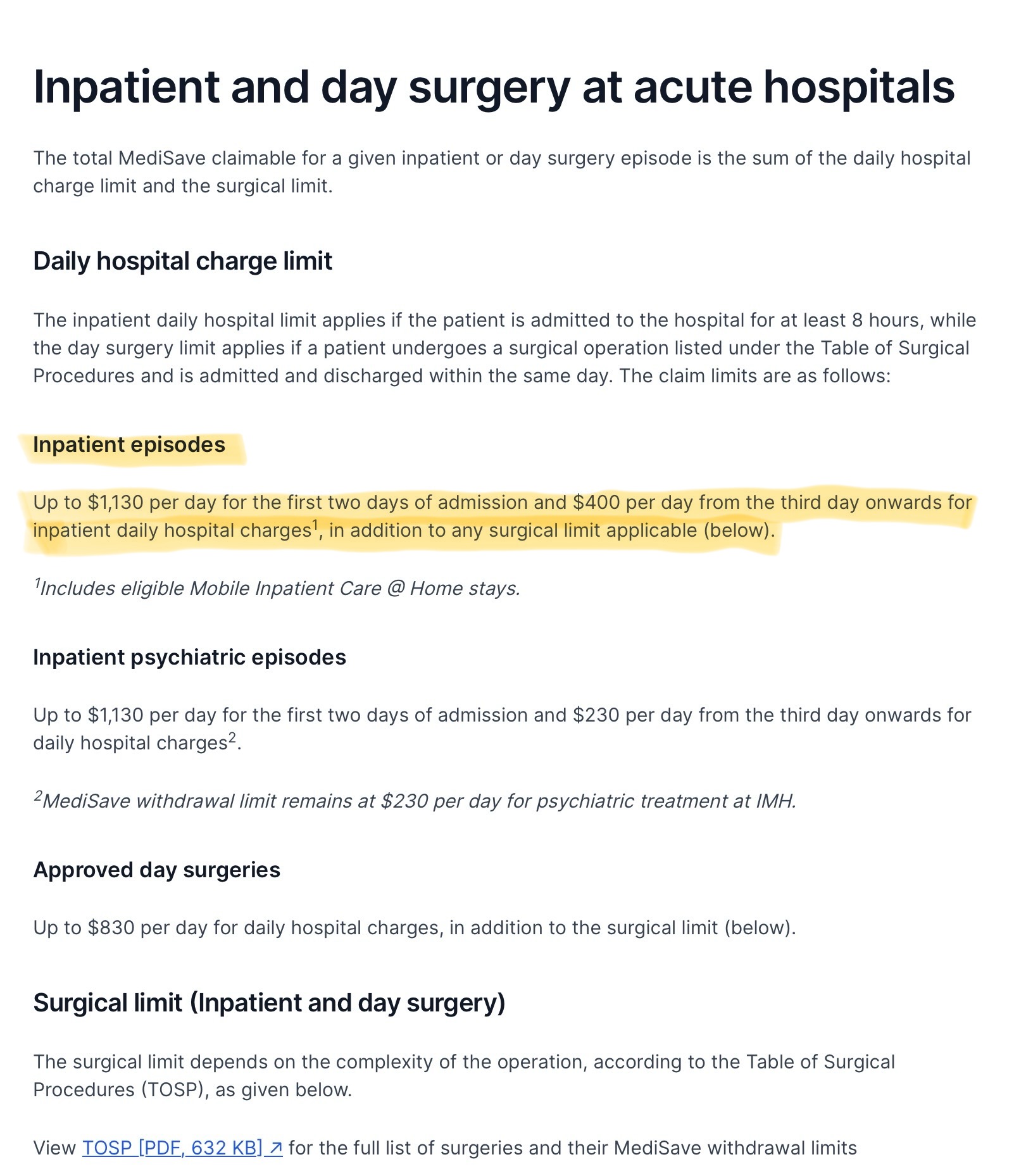
- Mother’s CPF payment: $4,680 (includes $900 reimbursed from prenatal checkups, consolidated into the delivery bill under the MediSave - Maternity Package. See CPF limits below)
- Baby’s cash payment: $0
- Baby’s CPF payment: $1,608.10 (claimed under MediSave Inpatient Care. CPF can be used for a family member’s hospital bills; see reimbursement limits below)

💰 Expenses Summary with Detailed Breakdown
Why I Chose to Deliver at a Public Hospital
🏥 Demystifying Private Hospitals
Based on my previous experience with prenatal checkups and delivery at a private hospital, years of caregiving during my family member’s cancer treatments, and two hospital stays with my son for Kawasaki disease, I’ve become quite familiar with both public and private healthcare systems. Each has its strengths and limitations.
I don’t have a strong preference either way; instead, I focus on using medical resources efficiently. With the experience of my first pregnancy, I felt less psychological pressure and was already familiar with the prenatal care process. For routine checkups in a healthy pregnancy, public healthcare resources are sufficient. If complications arise, I’d consider consulting specialists at different hospitals.
🏥 A Shift in the Working Mindset
During my first pregnancy, I visited a private clinic for checkups. Appointments were more flexible — I usually went on Saturdays, and I could call my doctor directly. Back then, I was under heavy work stress, had a demanding boss, led a team, and carried a misplaced sense of responsibility that made me feel guilty for taking time off on weekdays.
Years later, I’ve become more relaxed — and now take a more laid-back approach to work. I schedule prenatal appointments according to public hospital availability, even if it falls on weekdays. If I take a half-day off for a checkup, I consider it a favor to my boss. Sometimes, I’ll spend half the day at the clinic and the other half just resting at home.
🏥 More Sensitivity to Expenses and Risk
By the time I was preparing for my second delivery, I had become more financially aware and focused on mindful spending and risk control.
I’ve previously shared about my decision regarding maternity insurance: in the end, I didn’t buy any. None of the affordable options covered what I feared most — the high costs associated with preterm birth or coverage for congenital conditions. The only reliable safety nets were MediShield Life (which covers all Singaporean newborns without underwriting) and government subsidies available through public hospitals.
Choosing a public hospital was, in part, a strategy to mitigate financial risk in the event of medical complications.
It turned out a pleasant experience at KKH.
Birth Diary
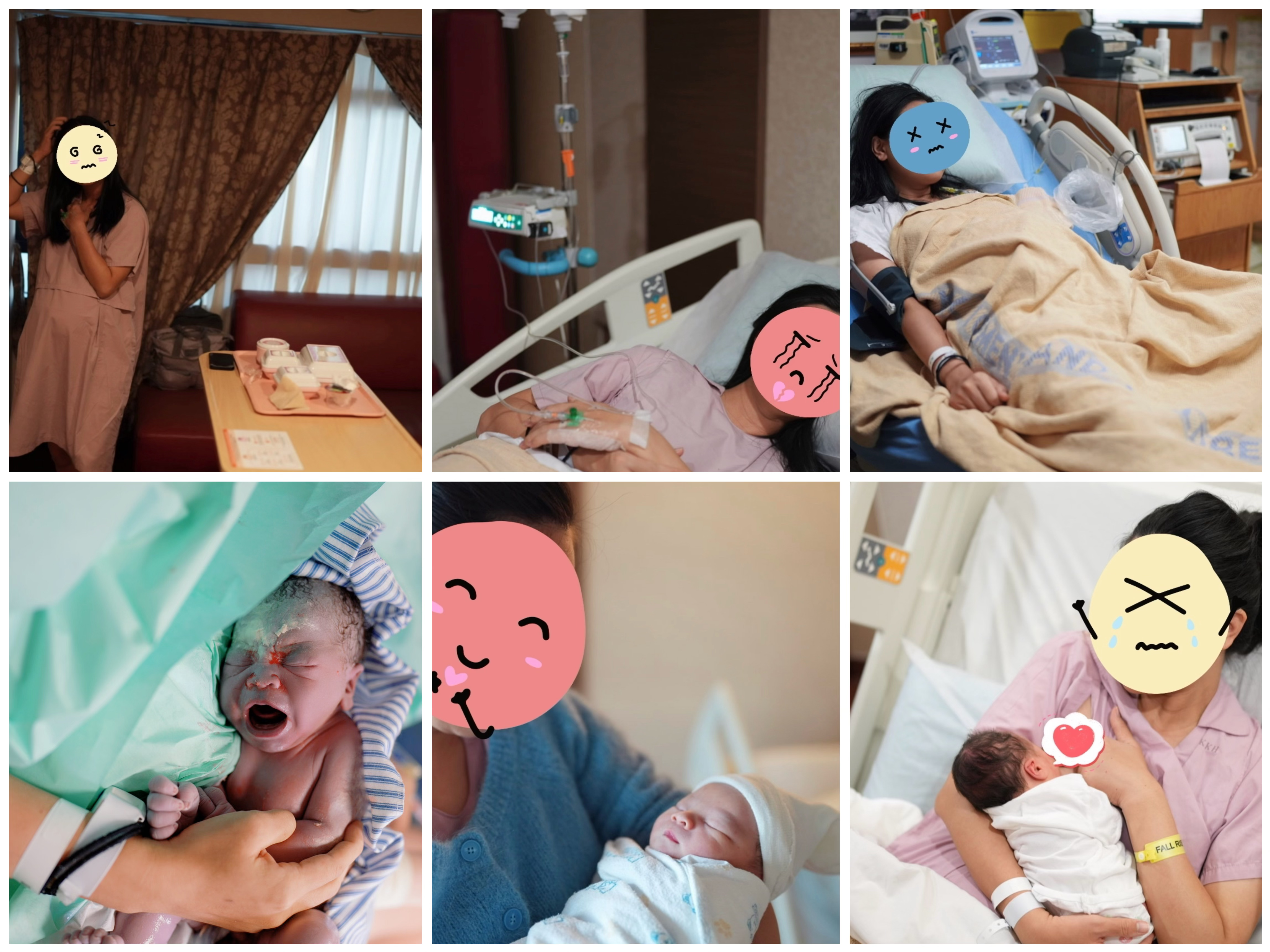
🤰🏻 Day 1
Since the baby was not ready to check out on time, the doctor scheduled induction one day before the due date. I checked in at 12 PM and chose A1 ward. During check-in, I was informed that since I didn’t reserve a single room, I needed to be on the waiting list and undergo induction in Ward 32 until a single room became available after delivery.
After admission, we went to the multi-bed ward in Ward 32 for examination and to insert the induction medication. Here, we were informed that we could directly move into a single room to await labor.
At 2:10 PM, the induction medication was administered, and after about an hour of fetal monitoring, I was transferred to a single room. There was no continuous fetal monitoring in the room; nurses monitored for about half an hour every six hours, and the doctor would be notified if the fetal condition was unstable. Unless I felt contractions, there would be no internal examination to check dilation. There was no pain management in the room, so if the pain became unbearable, I needed to inform the nurse to go to the delivery room. The nurse also advised me to promptly inform them of other symptoms such as water breaking or bloody show.
🤰🏻 Day 2
At 2 AM (twelve hours after medication), antibiotics were started (GBS positive). Around 3 AM, continuous contractions began. I persisted until 6 AM, with contractions every two to three minutes and quite painful, so I informed the nurse. They immediately arranged a wheelchair to take me to the delivery room.
Around 7 AM, I entered the delivery room. The on-duty doctor performed an internal examination and found that I was already dilated to three to four fingers. Natural contractions were evident, so I could get an epidural! The anesthesiologist was a bit busy, still attending to the previous patient. During this time, the contraction pain was tolerable, and deep breathing could mostly alleviate it. Around 8 AM, the anesthesiologist administered the epidural, and I immediately felt warmth in my lower limbs and pain relief. I might be more sensitive to epidurals, as the pain was immediately relieved after the epidural in my first delivery as well. The side effect of the epidural this time was itchiness, but it was tolerable. Last time, I was shivering the whole time, but this time I only started shivering when it was time to give birth. There was almost no pain when getting the epidural. The anesthesiologist was especially gentle, explaining each step in a soft voice, even though she was working behind me, telling me what she was doing and what I would feel. This was very reassuring, and she gave me an encouraging smile when she finished. The anesthesiologist I encountered during my first delivery was also like this, and both epidural experiences were very good 👍.
After the epidural, the amniotic sac was manually ruptured, and then I waited for dilation to progress slowly. The my obstetrician came to check once and felt that the natural contractions were still good, so she didn’t administer Pitocin. Later, the frequency of contractions gradually decreased, so Pitocin was started. During this time, the baby’s heartbeat dropped, and the on-duty doctor came to check the dilation and amniotic fluid situation, confirming that there were no problems. The Pitocin level was lowered, and the baby’s heartbeat returned to normal.
Around 2 PM, the contractions felt significantly stronger, and I called the nurse for an internal examination. I was already dilated to nine fingers, and the nurses and midwives immediately prepared for delivery in the delivery room.
After waiting for more than an hour, the midwife finally appeared. By this time, I was fully dilated and feeling the pain of contractions. I pressed the button to increase the epidural dosage once. The midwife immediately called my obstetrician, and they prepared to start pushing. I pushed less than ten times, and the baby was born in about ten minutes! I didn’t expect it to be so easy; it seems that the second delivery is indeed easier.
The newborn was roughly wiped and placed on my chest. The doctor then dealt with the placenta, umbilical cord blood collection, and minor tear stitching. My husband cut the umbilical cord and then took pictures non-stop. The midwife and doctor chatted, and it seemed that she was particularly busy, going back and forth between different delivery rooms, which explained why I had to wait so long.
The baby was born rosy and crying loudly. After a simple cleanup, the baby was placed on my chest for skin-to-skin contact. I remember that there was no skin-to-skin contact during my first delivery; the baby was wrapped up before being given to me.
By the time it was almost dinner, dinner was delivered directly to the delivery room. While I was eating dinner, the nurse continued to check the newborn’s vital signs. After dinner, I was sent back to the ward with the tightly wrapped baby.
I needed to urinate independently within six hours, which went smoothly with the nurse’s assistance. Getting out of bed and walking around was not a big problem at this time.
👩🏻🍼 Day 3
KKH encourages babies to stay with their parents, and babies are not taken to the nursery room unless the parents request it. Having experience with our first child, we were also familiar with the routine. Dad was responsible for changing diapers, and I breastfed on demand. However, the baby was not full and cried on the first night, and we struggled for three hours. Finally, we called the nurse to feed the baby formula, and the baby finally settled down 😅.
In the morning, the resident doctor came to check on us and said that we could be discharged this afternoon. Wanting more time to recover and considering the baby care issues, we requested to stay one more night, and the doctor agreed. Later, my obstetrician came to check, confirmed that urination was normal, and there was no bleeding or other physical discomfort, and confirmed with us that we would be discharged tomorrow morning.
This day was basically spent lying down, occasionally getting out of bed to walk around. I ate two hospital confinement meals. The menu in the single room has a lot of variations, and the taste was not bad.
The baby also underwent various examinations, including a hearing test, heel prick test (didn’t understand exactly what was being tested), jaundice test, and BCG vaccination.
We had experience, so on the second night we directly called the nurse to feed the baby formula, and the baby slept very well—we also slept very well 😂.
👩🏻🍼 Day 4
In the morning, the pediatrician came for a routine checkup, and the baby was normal and could be discharged. The my obstetrician also came to check on us, asked about the physical condition, and congratulated us.
KKH does not bathe the baby. The doctor explained that newborns have a layer of vernix that protects them, and it is not recommended to bathe them within 48 hours of birth. Before discharge, a caregiver will come specifically to give the baby a simple wipe down, change the baby into discharge clothes, and hand the baby neatly to the mother 👩🏻🍼.
After that, the nurse explained how to go to the Polyclinic to monitor jaundice levels after discharge: you can go directly to the Polyclinic walk-in the next day, and newborns will be given priority even without an appointment. For the previous delivery at a private hospital, it defaulted to making appointments with private pediatricians. However, my first experience with that private pediatrician was not good, and later a friend suggested that we only needed to go to the Polyclinic for newborn jaundice, development, and vaccinations.
Then the pharmacy nurse came to give the medicine. After explaining the various medications, she gave another piece of paper with a QR code, which could be scanned to learn about the uses and methods of taking the various medications.
Finally, the mother and baby must go to the nurse station to have the sensors on their bodies cut off before leaving the ward: to ensure that the baby is not taken by mistake 🤭.
👩🏻🍼 Overall Experience
The first delivery was a natural water break, vaginal delivery after more than ten hours, without induction experience. It took about ten hours from 3cm dilated with epidural to delivery, and I pushed for half an hour and finally used vacuum extraction. The second delivery was induced upon admission, started in the early morning of the next day, and took eight hours from 3cm dilated with epidural to delivery, and I pushed for ten minutes and then the baby was born. Both times there were minor tears.
The KKH private route delivery experience was very good. The ward was a bit old but fairly spacious and comfortable. It was much better than the first delivery experience at Thomson.
One reason is that I had a better mindset with the second child, and both induction and delivery went smoothly. The last time, I encountered Covid and had to changed my attending obstetrician last minute.
Another reason is that I am more satisfied with the KKH nurses, especially the pediatric nurses. This time, the nurses were very professional and helpful in assisting with getting out of bed to urinate, explaining breastfeeding, helping with formula feeding, and changing diapers. My older son was hospitalized twice in KKH, and the nurses and caregivers took good care of them. I was shocked to see the pediatric nurses feeding premature babies smaller than the size of a palm with such skill! However, the nurses I encountered at Thomson during my first delivery had bad attitudes. First, a nurse came to assist me in getting out of bed and was very rude. Later, the baby kept crying and I didn’t know what to do. After ringing the bell, a nurse came in, didn’t explain much, and just grabbed the baby and forced the baby’s mouth to my breast, and then left in a hurry 🤷🏻♀️. Previously, when family members had surgery and were hospitalized for ten days at Gleneagles, the nurses encountered during the stay were also uneven. One nurse’s attitude clearly improved when our attending physician came to check on the room 🙄.
One of the biggest reasons for choosing KKH is the consideration of unexpected situations that may be encountered after the baby is born. KKH is the most authoritative in newborn treatment. Previously, I discussed newborn premature birth or other complications that may involve high treatment costs when comparing pregnancy insurance. The only way to shift the risk is to choose government hospital subsidized medical care and MediShield Life insurance. Admission admin staff explained this clearly as well: A1 Ward does not provide financial assistance. When necessary, mothers can choose to downgrade to subsidized wards, and newborns can also enjoy subsidized assistance at the same time.
Of course, private hospitals may offer a more “luxurious” maternity experience for mothers: you can choose more experienced obstetricians (many excellent doctors choose to set up their own private clinics) and enjoy the facilities of private hospitals. Public hospitals inevitably face resource shortages, rigid processes, and uneven doctor quality. Trade-offs everywhere.
Read More
Company Insurance vs Personal Insurance: Practical Lessons on Why Claim Order Really Matters
A real case study on claiming company group insurance vs personal IP hospital insurance in Singapore: how claims recovery works, why order matters for riders, and practical tips from experience.
Profoundly Simple Investment Strategies
Key investment theories from four finance legends: Markowitz's MPT, Sharpe's CAPM, Fama's EMH, and Bogle's CMH—and how they shape my portfolio.