Sharing My Experience with Medical Concierge Services Recommended by Insurance Agents
When a family member was diagnosed with a serious condition at a public hospital’s emergency department, we immediately reached out to our insurance agent, as we had private hospital coverage in place. The agent promptly introduced us to a medical concierge representative. On the concierge’s recommendation, we sought a second opinion from a senior doctor on the insurer’s panel. However, several aspects of the experience left me feeling uneasy:
- The specialist ordered an identical set of tests to those already conducted at the public hospital, explaining that private hospitals might process them faster. Yet, even before the test results were available, he pressured us to proceed with surgery — citing his upcoming year-end vacation. This gave me the impression that patient care was not his top priority.
- After each consultation, the concierge representative would approach the clinic’s front desk staff, request invoices, and whisper quietly with them. The financial ties behind these interactions made me uncomfortable.
- I also discovered that the concierge representative lacked in-depth knowledge of both insurance policies and the medical system. His role was limited to basic assistance, such as guiding us through hospital departments or handling simple email exchanges with the insurer — services that provided little real value to us. What we needed was expert guidance to help us navigate the best available medical options, which he was unable to provide.
Curious about how this industry operates, I asked about their business model. It became clear that their revenue comes from marketing services provided to medical clinics. In other words, they act as a referral channel for healthcare providers, raising serious concerns about conflicts of interest. When the financial incentives are paid entirely by clinics, can such services truly prioritize patients’ needs? If different clinics offer varying levels of incentives, how can patients be sure that referrals are being made objectively?
Unfortunately, my concerns were soon confirmed. After consulting a medically trained friend, I ultimately decided to follow her recommendation and sought treatment from a non-panel doctor instead of the concierge’s referral. At that point, both the insurance agent and concierge representative vanished from the process. They were absent from all subsequent consultations and surgery arrangements.
In theory, if their role was genuinely patient-centered concierge service, they should have stayed involved from start to finish — from recommending doctors to assisting with insurance claims. But because we did not follow their recommended referral, they had no further incentive to continue assisting us.
It wasn’t until after the surgery — following repeated reminders — that the insurance agent finally submitted the claim on our behalf. Even then, the process was handled poorly, and I eventually bypassed him to handle the claims myself.
Medical concierge services, in principle, do serve valid purposes: they are helpful for medical tourists visiting Southeast Asia, for ultra-high-net-worth individuals who require customized care, or for patients who are unfamiliar with the local healthcare system and may need extra support navigating appointments or arranging regular treatment schedules.
However, when these services are introduced through insurance agents and actively inserted into the care process for local patients who already have comprehensive private insurance coverage, and when the entire revenue stream comes from partnering healthcare providers, it becomes impossible for them to offer truly impartial advice. In fact, such arrangements can contribute to rising healthcare costs, indirectly driving up both medical and insurance inflation.
This issue is rarely discussed in public forums, but I did find some relevant information:
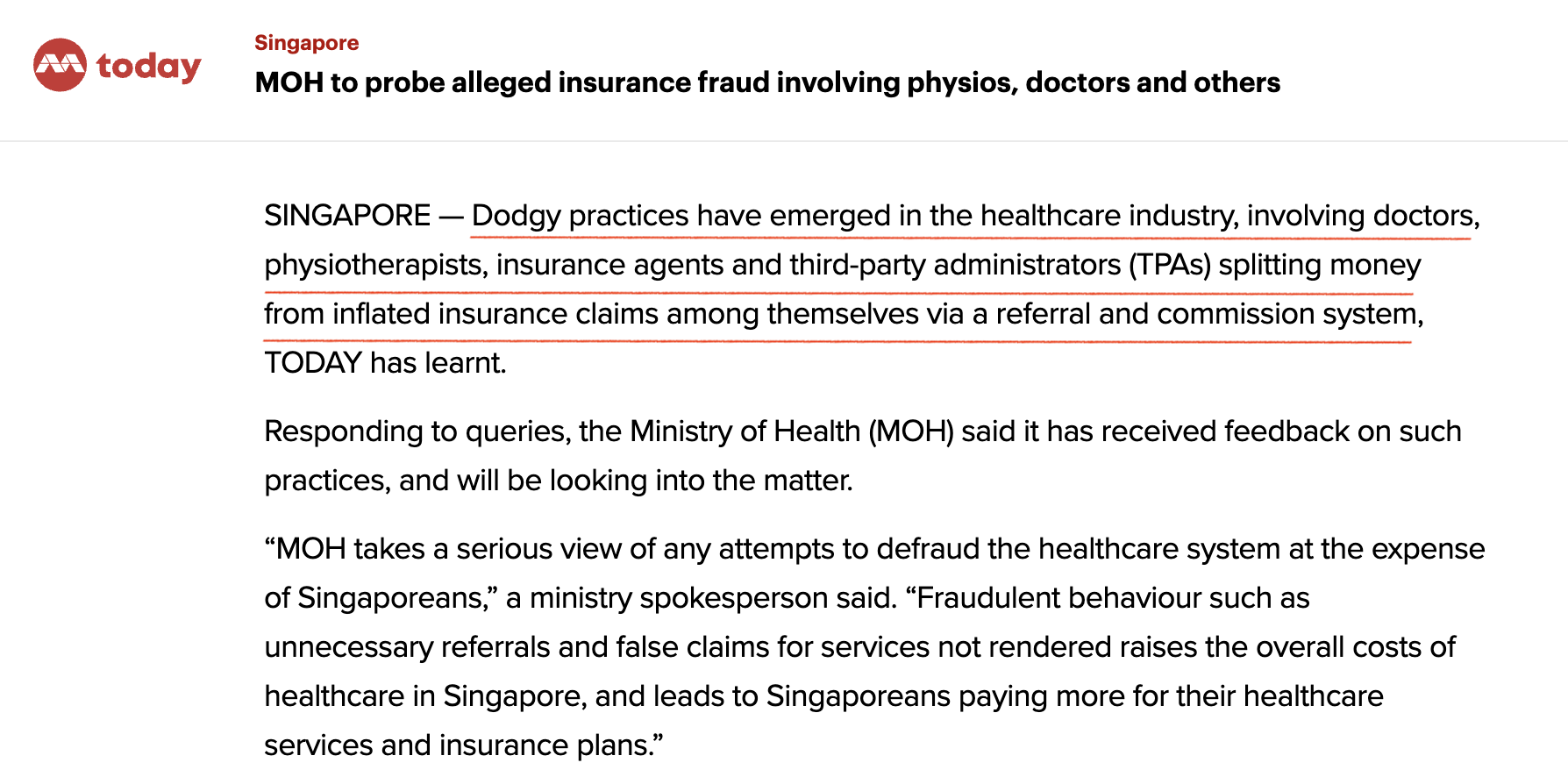
There was also a parliamentary discussion on this topic in 2021. Although guidelines exist (which are not legally binding) that require transparency in third-party service fees, in practice, grey areas remain.
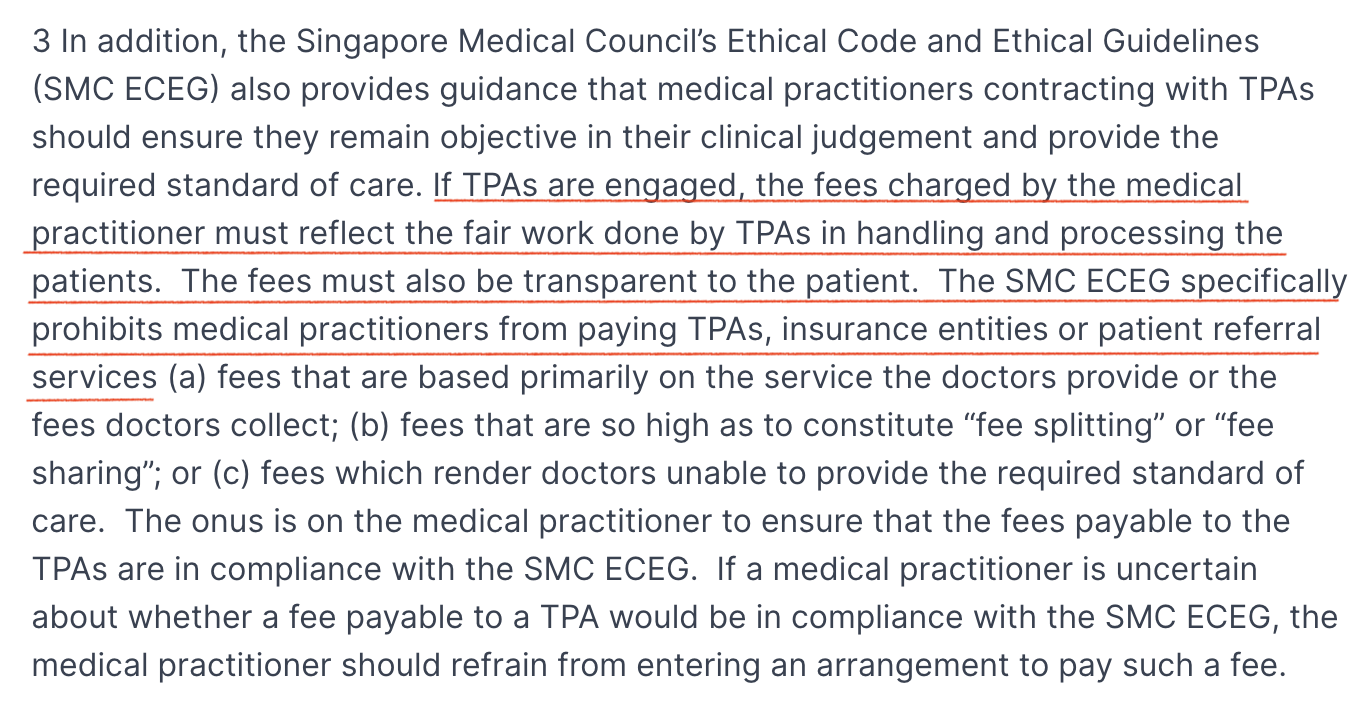
Reference
Read More
Insurance coverage for cancer treatment in Singapoe
How to structure insurance coverage for cancer treatment in Singapore: comparing MediShield Life, IP main plans, riders, and critical illness insurance for CDL and non-CDL drug coverage.
Investment Mindset that Inspires Me
Plan your life goals first, then plan your finance towards that; Live below your means; Buy term life and health insurance, that's it, then forget about insurance