As 2025 draws to a close, it’s a natural moment to look back on the year behind us and think ahead to what’s next. When it comes to personal finance, this annual reflection is more than a routine check-in—it’s a powerful habit that helps build long-term wealth and keeps life goals within reach.
My investment approach is firmly rooted in passive investing. I don’t chase excess returns, so my performance largely mirrors the broader market. Because of that, any single year’s return—good or bad—doesn’t carry much meaning on its own.
Instead of setting short-term return targets, I focus on savings goals tied to long-term investment objectives. Each year, I adjust my cash position, liabilities, and portfolio allocation to stay aligned with those goals rather than reacting to market noise.
2021–2023: Reflection and Course Correction
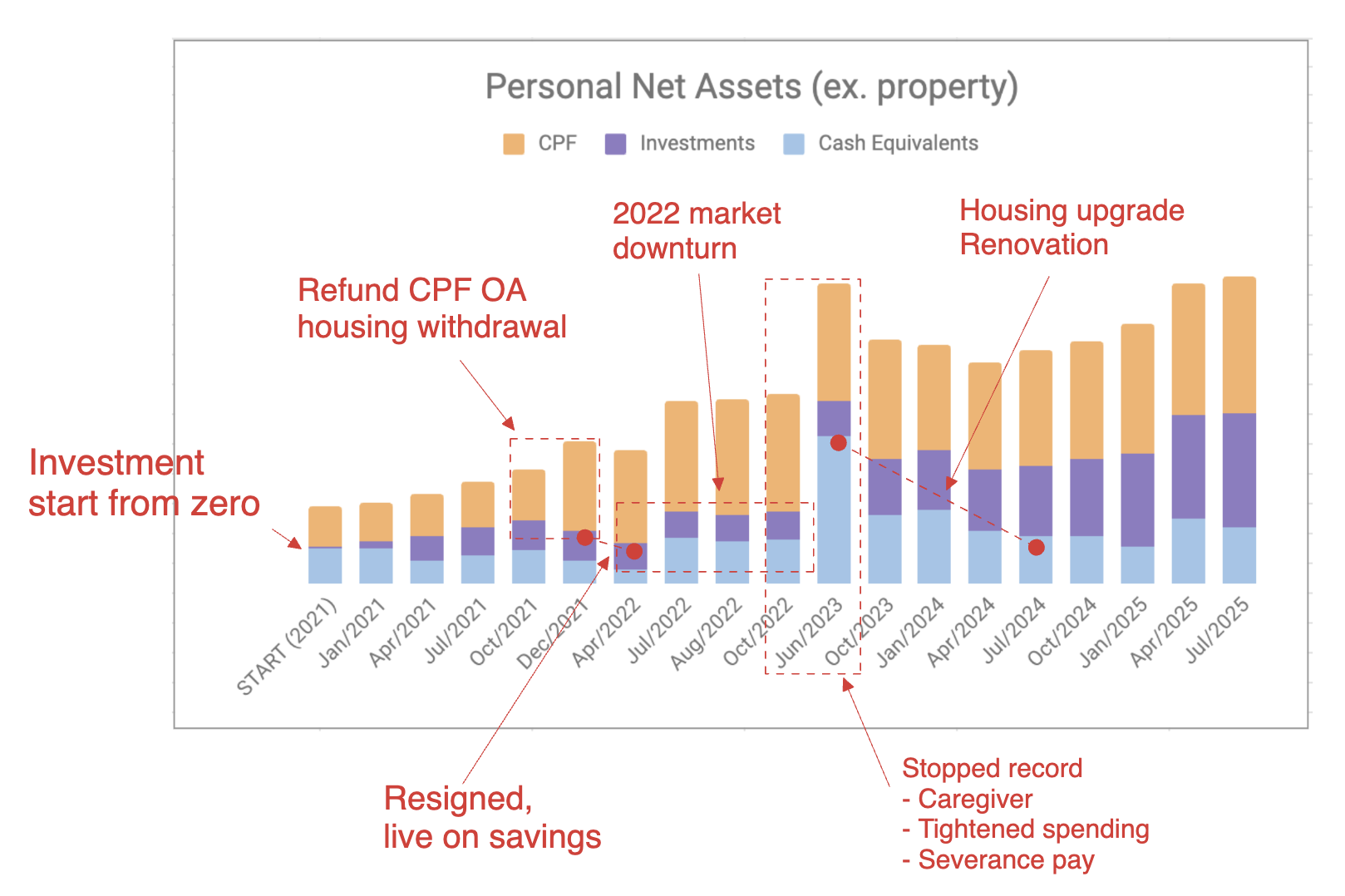
When I reviewed my net worth changes from 2021 to 2023, a few weaknesses became clear:
- Financial asset accumulation was slower than expected
- Cash and low-risk investments made up too large a share of assets
- Large cash inflows weren’t invested promptly
- Owner-occupied real estate dominated total assets
- The financial market downturn in 2022 coincided with a surge in real estate
- Overall debt levels were relatively high
In response, I set a three-year investment and wealth management plan for 2024–2026. After several steady years of execution, I’m happy to say that most of these goals were already achieved by 2025:
- Savings rate above 50% 👌🏻
- Stock-to-bond ratio above 40% 👌🏻 (25% → 52%)
- Debt ratio below 35% 👌🏻 (42% → 35%)
- Real estate below 50% of total assets 👌🏻 (60% → 45%)
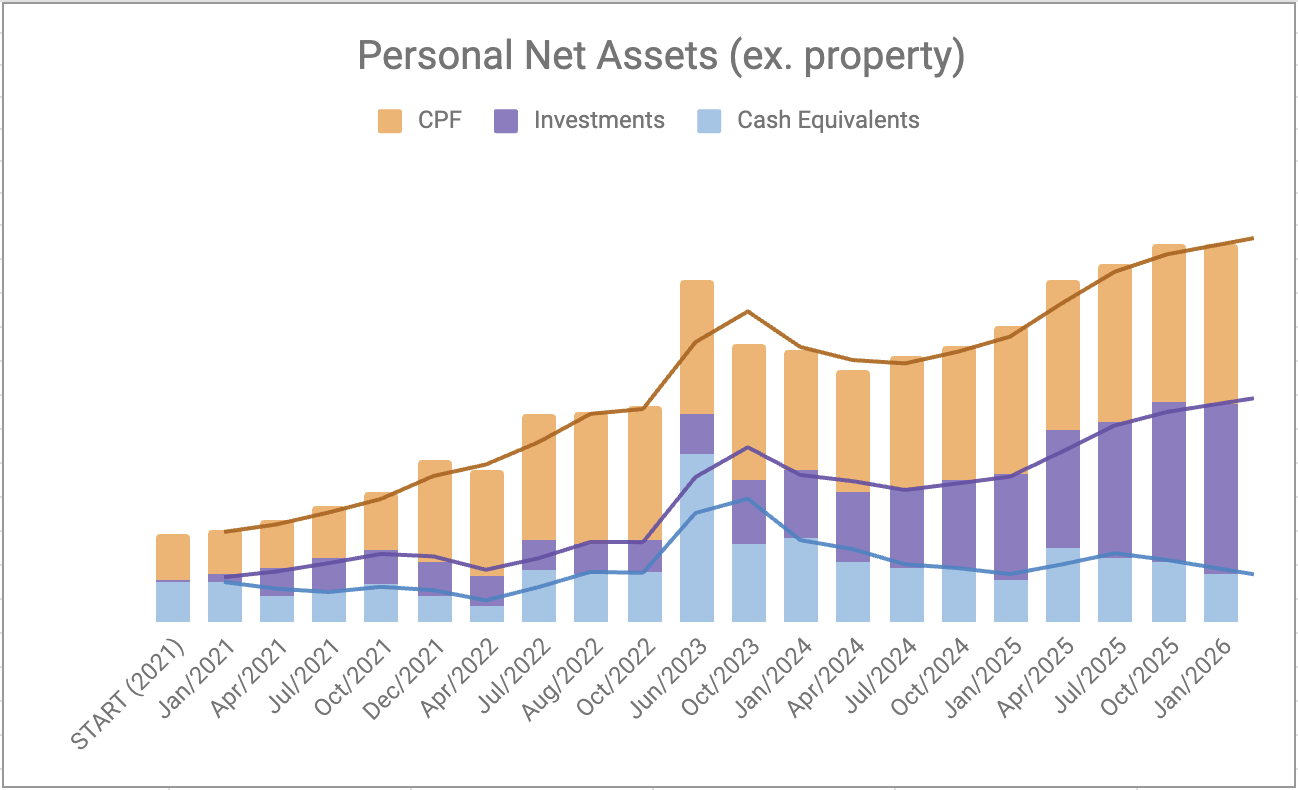
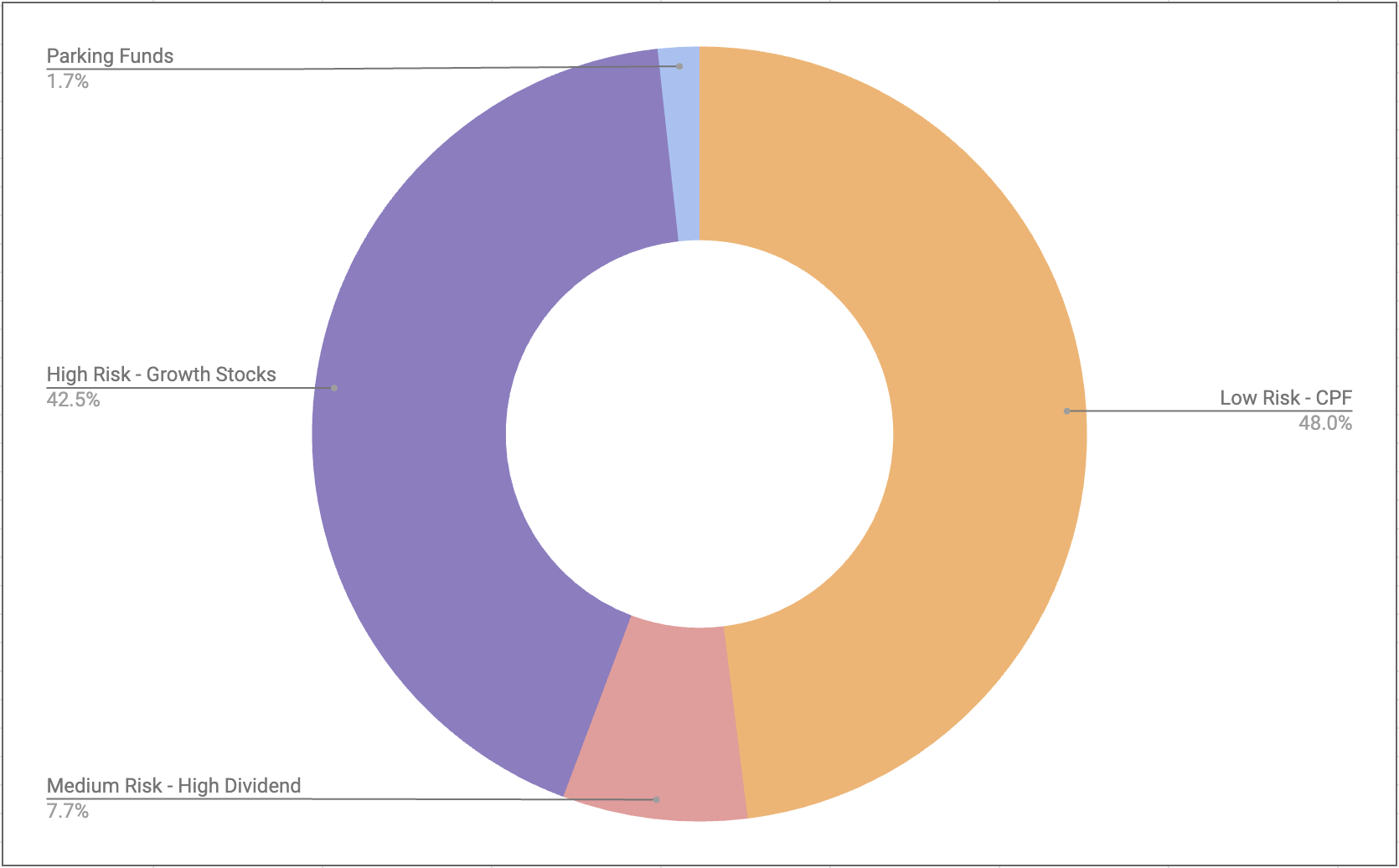
These improvements didn’t come from dramatic changes, but from consistent, disciplined decisions made year after year.
New Year Resolutions for 2026
This year also brought a major life change—we welcomed a new family member. With higher expenses on the horizon, I plan to track spending more closely for a period of time to build more accurate budgets and set a realistic savings rate. As a result, my target savings rate has been adjusted slightly downward.
On the investment side, I’ll continue increasing exposure to higher-risk assets and gradually raise my stock-to-bond ratio. I also plan to introduce a small allocation to cryptocurrency. After reviewing my asset allocation and long-term goals, ChatGPT suggested keeping this exposure below 5%, which aligns well with my risk tolerance.
My 2026 Investment & Wealth Management Goals:
- Track expenses in greater detail
- Allocate less than 5% to cryptocurrency
- Increase emergency fund savings (partially via money market funds)
- Maintain a savings rate above 40%; save 50% of additional income
- Raise the stock-to-bond ratio above 55%
- Reduce the debt ratio below 30%
Happy saving, happy investing—and most importantly, happy living.
Read More
Our Renovation Journey: Budgeting and Quotation Cost Breakdown
Our S$70K renovation budget planning. Comparing 5 different IDs' quotations
Profoundly Simple Investment Strategies
Key investment theories from four finance legends: Markowitz's MPT, Sharpe's CAPM, Fama's EMH, and Bogle's CMH—and how they shape my portfolio.